Best Time to Hike the Tour du Mont Blanc
Thinking about hiking the TMB but not sure when to go? Here's an honest month-by-month breakdown of conditions, refuges, and what to expect on the trail.
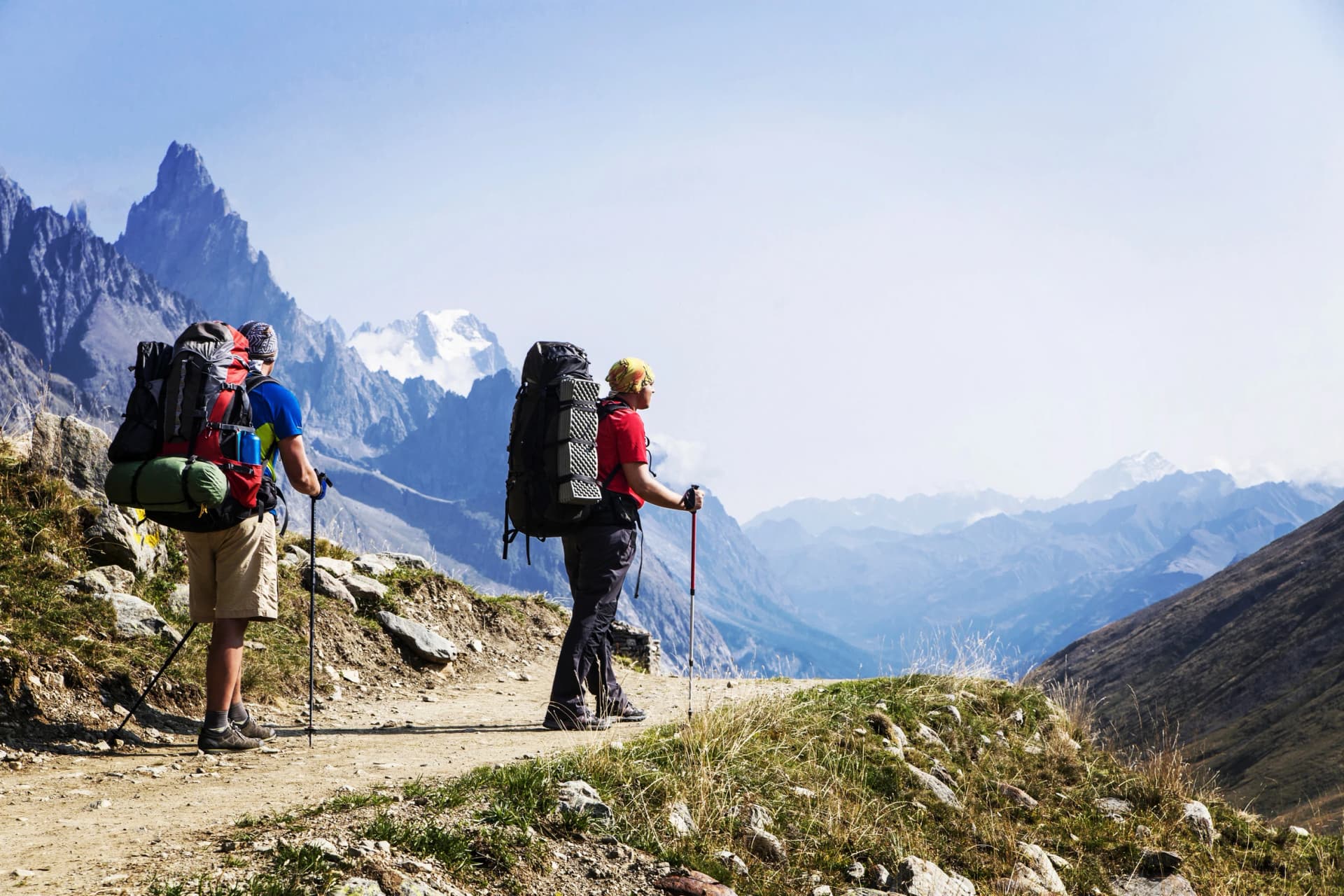
The best time to hike the Tour du Mont Blanc is July and August, if what you want is guaranteed conditions, a fully open refuge network, and a trail that's ready to receive you without any asterisks.
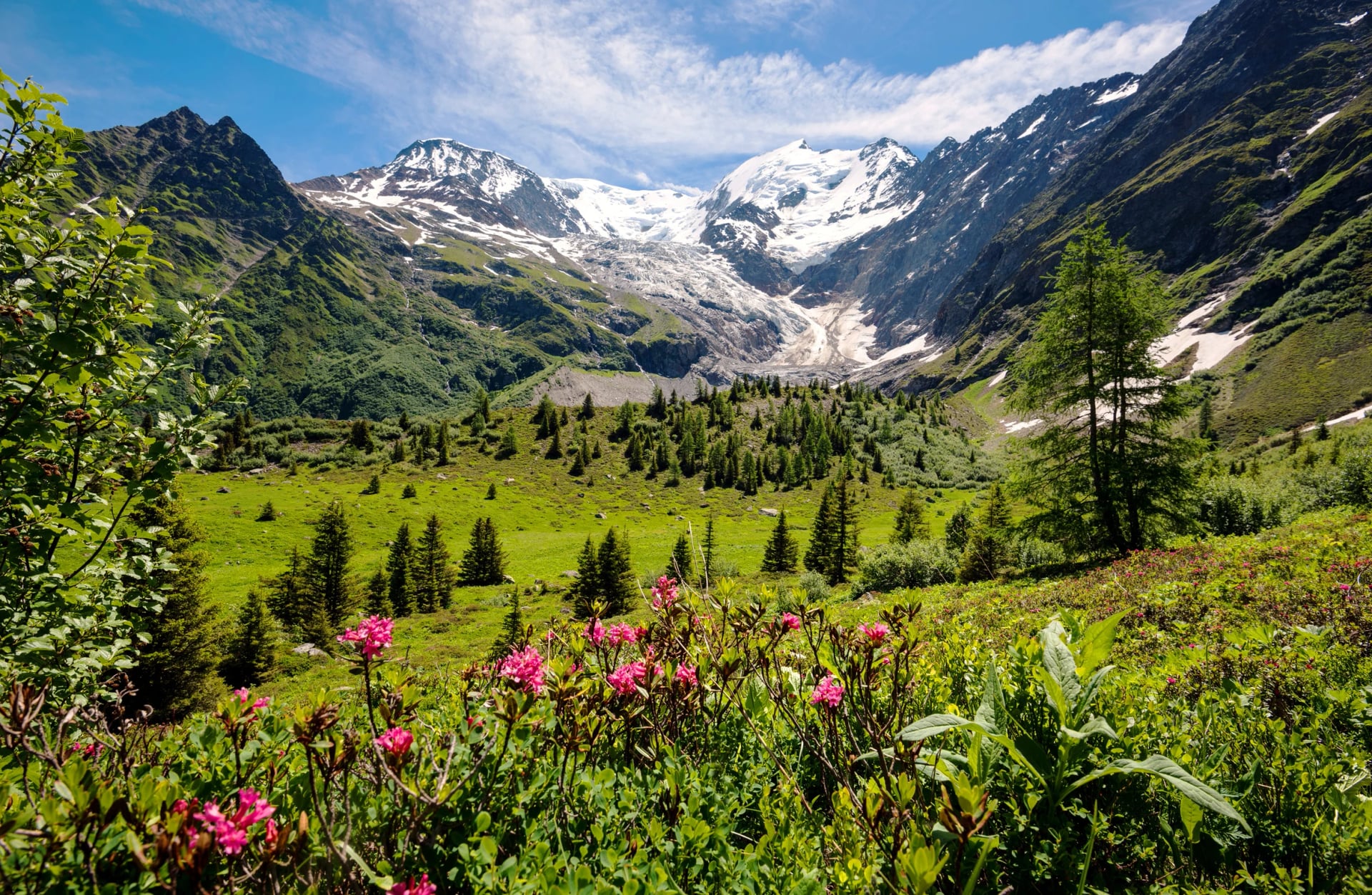
But that's not the whole answer. For hikers who want solitude, early September is arguably better. For those comfortable with snow and crampons, late June offers something peak season never will. And for anyone planning around a specific window rather than an ideal, knowing what each month actually delivers is more useful than a single universal recommendation.
This guide covers all twelve months honestly. The best, the workable, and the ones to avoid, so you can find the right time for your trip.
The Best Months to Hike the TMB
If you have full flexibility on dates, aim for the window between late June and mid-September. Within that window, July and August are the gold standard: all refuges open, passes clear, weather at its most reliable, and the full trail infrastructure in place. Early September runs a close second for experienced hikers who'd trade some of the safety net for significantly quieter trails. Late June is the underrated option for those who want the trail before the crowds and don't mind earning it through some snow and variable conditions.
Everything outside this core window involves trade-offs that are worth understanding clearly, which is what the rest of this guide is for.
June
June is the official start of the TMB season, and the month that requires the most preparation of any within it. Refuges open progressively from around mid-June. The high passes carry significant snow throughout the first half of the month, and how much remains in the second half depends heavily on that year's snowpack. Depending on the year, full winter mountaineering equipment or only microspikes are necessary for sections above 2,000m. The demanding variants are largely off-limits until late in the month, and conditions vary more dramatically between years than in any other season month.
What June offers in return: wildflowers at their absolute peak, wildlife that hasn't yet retreated from the trail, quieter refuges, and a trail that feels genuinely adventurous rather than well-trodden. For the right hiker, it's one of the most memorable ways to do the TMB.
For the full picture on hiking the TMB in June, read our in-depth guide to the Tour du Mont Blanc in June.
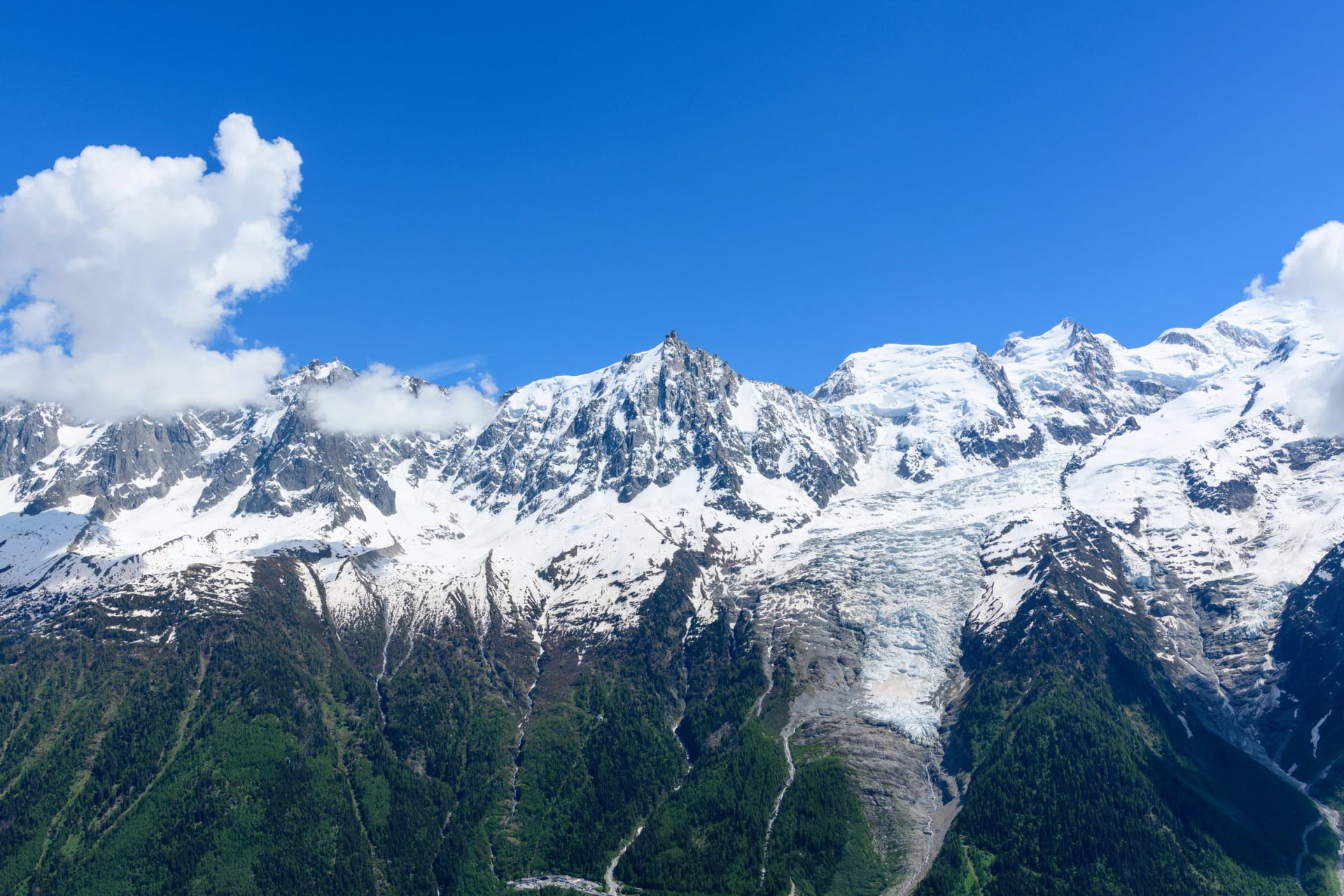
July: Best Month
July is peak season on the Tour du Mont Blanc, and for good reason. By mid-July, the high passes are reliably snow-free, all refuges are fully operational, every transport link is running, and the trail is set up to receive hikers at every level of experience. Weather is at its warmest and most stable, with average valley temperatures of 21–26°C (70–79°F). The full refuge network means the safety net is as tight as it ever gets. You are rarely more than an hour from a staffed hut. All variants are open and in their best condition.
The trade-off is crowds. From mid-July onward, the TMB is one of the busiest long-distance trails in Europe. Popular refuges are full, the most famous sections carry large guided groups, and the solitude that defines early season is largely absent. The UTMB ultramarathon takes place at the end of August and bleeds into early September — avoid hiking during race week if you want the trail to yourself.
July is the right choice if: you want guaranteed conditions, maximum trail infrastructure, warm temperatures, and the international atmosphere the TMB is known for. Book refuges as early as possible, July beds go fast.
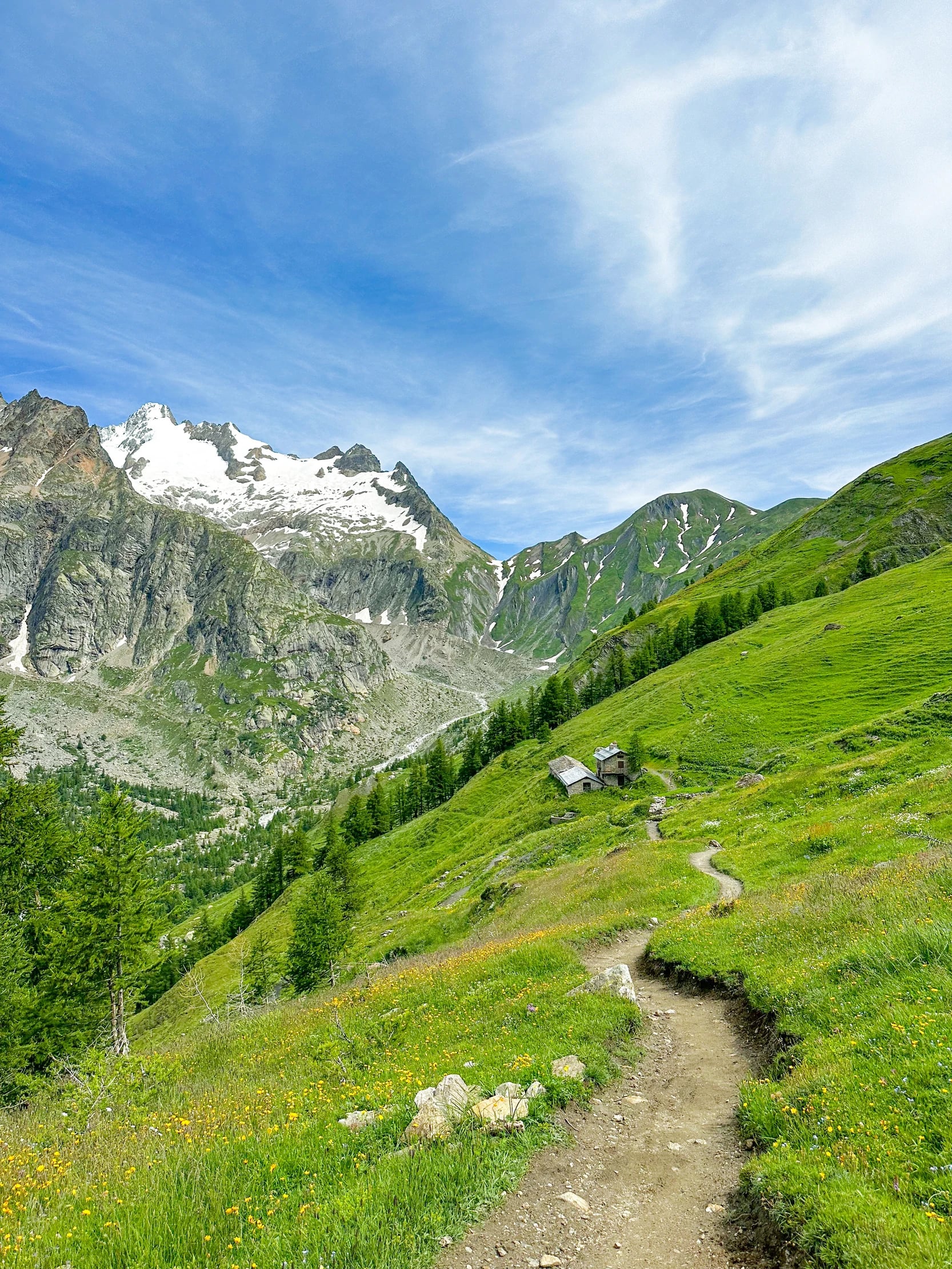
August: Best Month
August is July's close sibling and shares most of its advantages: clear passes, fully open refuges, reliable weather, and maximum daylight. Average valley temperatures are similar to July (21–26°C), though afternoon thunderstorms become more frequent from mid-August. The standard Alpine rule of being off the high passes by early afternoon applies firmly in August. The 15th of August is a French national holiday, which brings an additional surge of day hikers and weekend walkers to the lower sections of the trail.
The last week of August overlaps with the UTMB race, which transforms Chamonix and sections of the trail with thousands of runners and spectators. Some hikers love the energy of hiking alongside the race. Others find it incompatible with the experience they came for. Check the UTMB dates for your year and decide accordingly.
August is the right choice if: July is fully booked, you prefer the warmest possible temperatures, or you want to experience the TMB at its most lively and international. The same booking urgency as July applies, don't leave it for later.
September
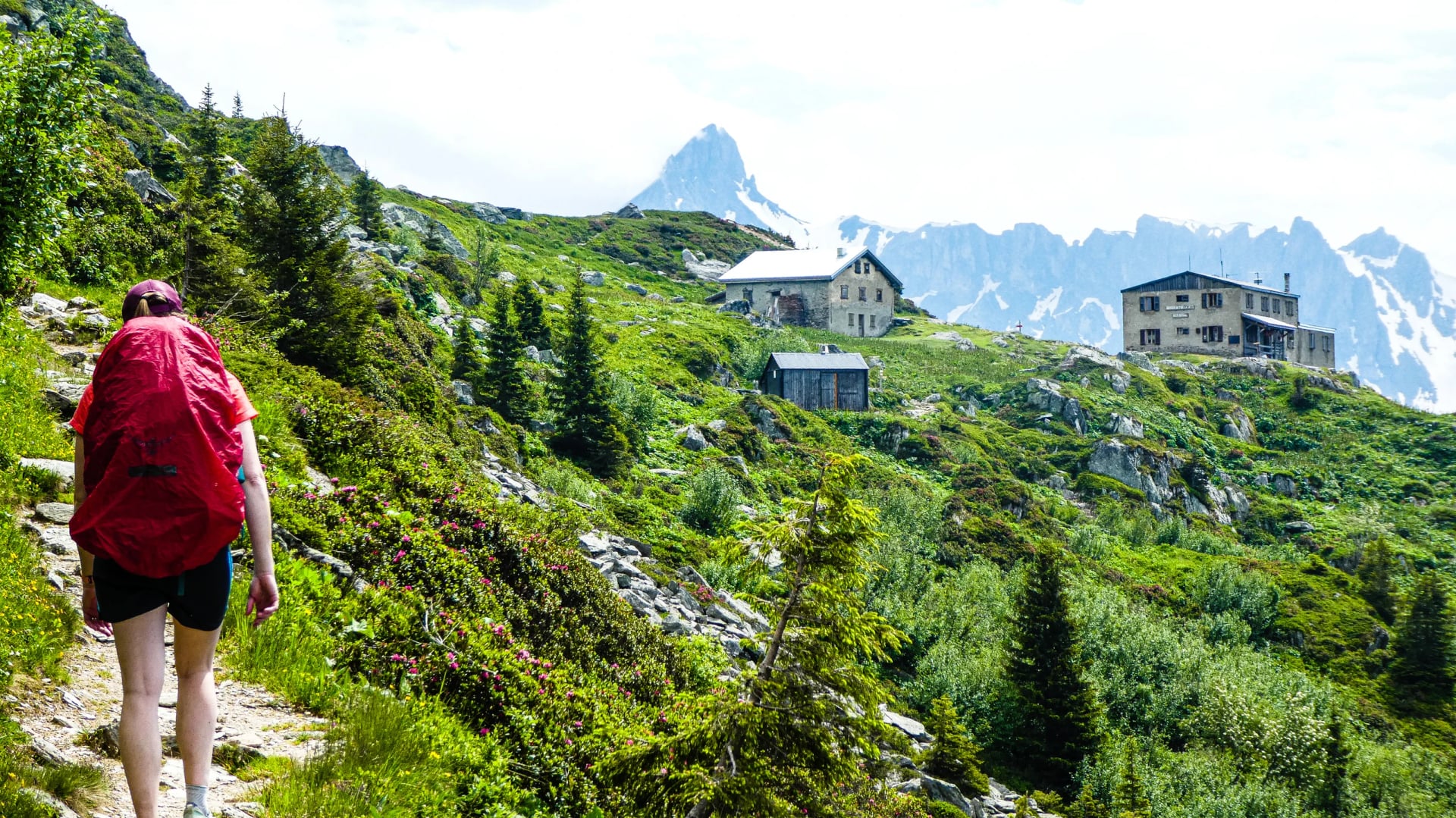
September is the TMB's best-kept secret, but only if you understand how the month works. Early September is genuinely outstanding: passes snow-free, trail conditions at their best, crowds a fraction of August levels, and the light noticeably more beautiful than anything midsummer offers. The larch forests on the Italian slopes begin their turn toward gold. The refuges have room to breathe.
The catch is that September changes as it progresses. Refuges begin closing around mid-month. Most are shut by September 20th, with higher-altitude huts closing first. Some cable cars and shuttle buses stop running by mid-September. Weather becomes colder and less predictable, and early snowfall on the higher passes is a genuine risk from mid-month onward.
September is the right choice if: you want the best combination of trail conditions and solitude, are flexible enough to adapt if a refuge has closed, and are prepared for colder temperatures and less predictable weather than July or August.
For the full picture on hiking the TMB in September, read our in-depth guide to the Tour du Mont Blanc in September.
October
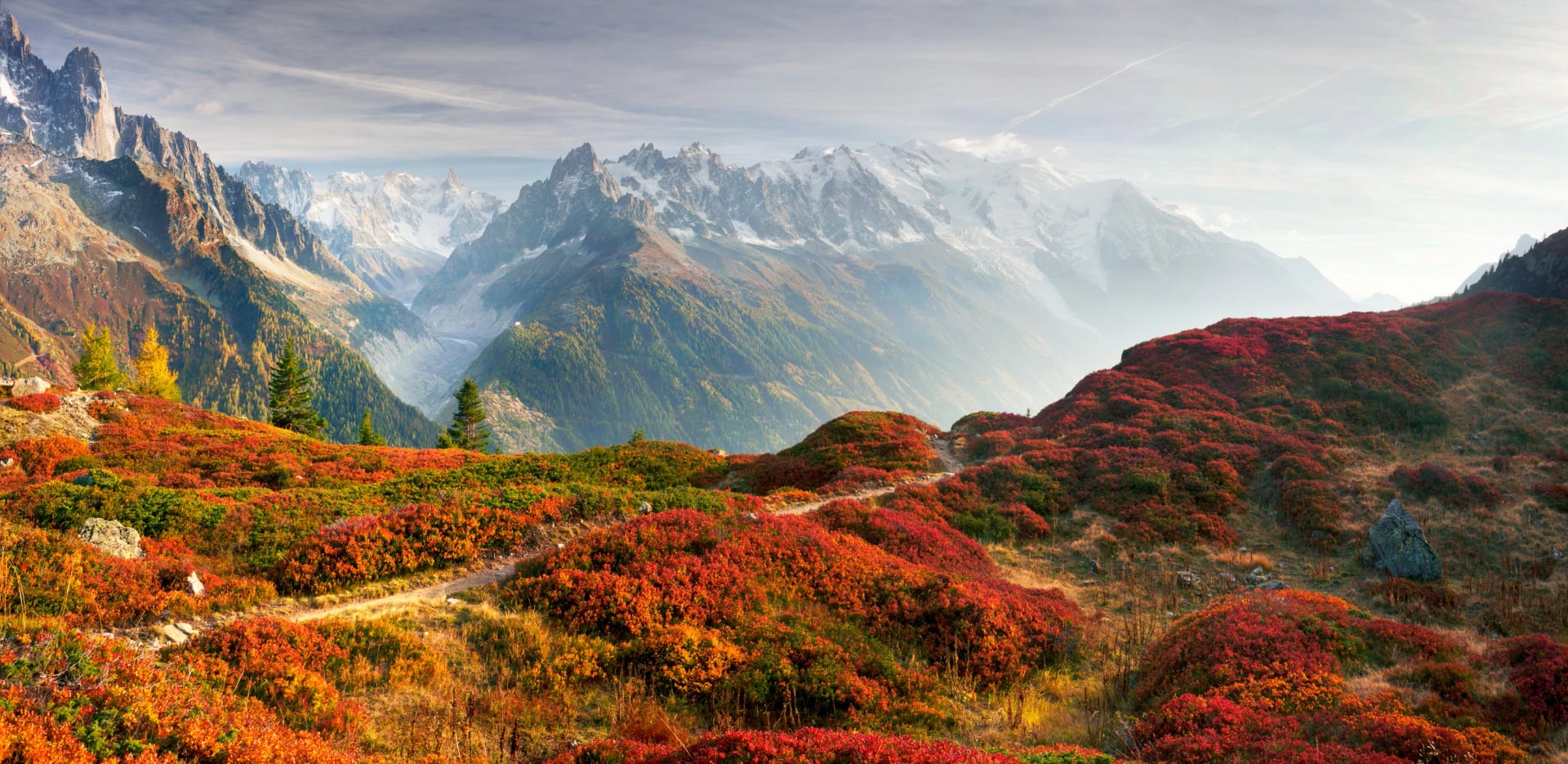
October marks the end of the TMB as a supported trekking route. By early October, the vast majority of refuges have closed for the season. Cable cars stop running, shuttle buses cease, and the trail infrastructure shuts down. Temperatures drop significantly and early season snow begins to settle above 2,000m. The trail is still physically passable in early October for experienced and self-sufficient hikers carrying camping equipment, but there is no safety net and conditions can deteriorate rapidly. For most hikers, October is the month to plan next year's trip, not to walk this year's. The valley towns remain beautiful in autumn colour, and the lower walks around Chamonix and Courmayeur are worth visiting, but the circuit itself is done for the year.
May
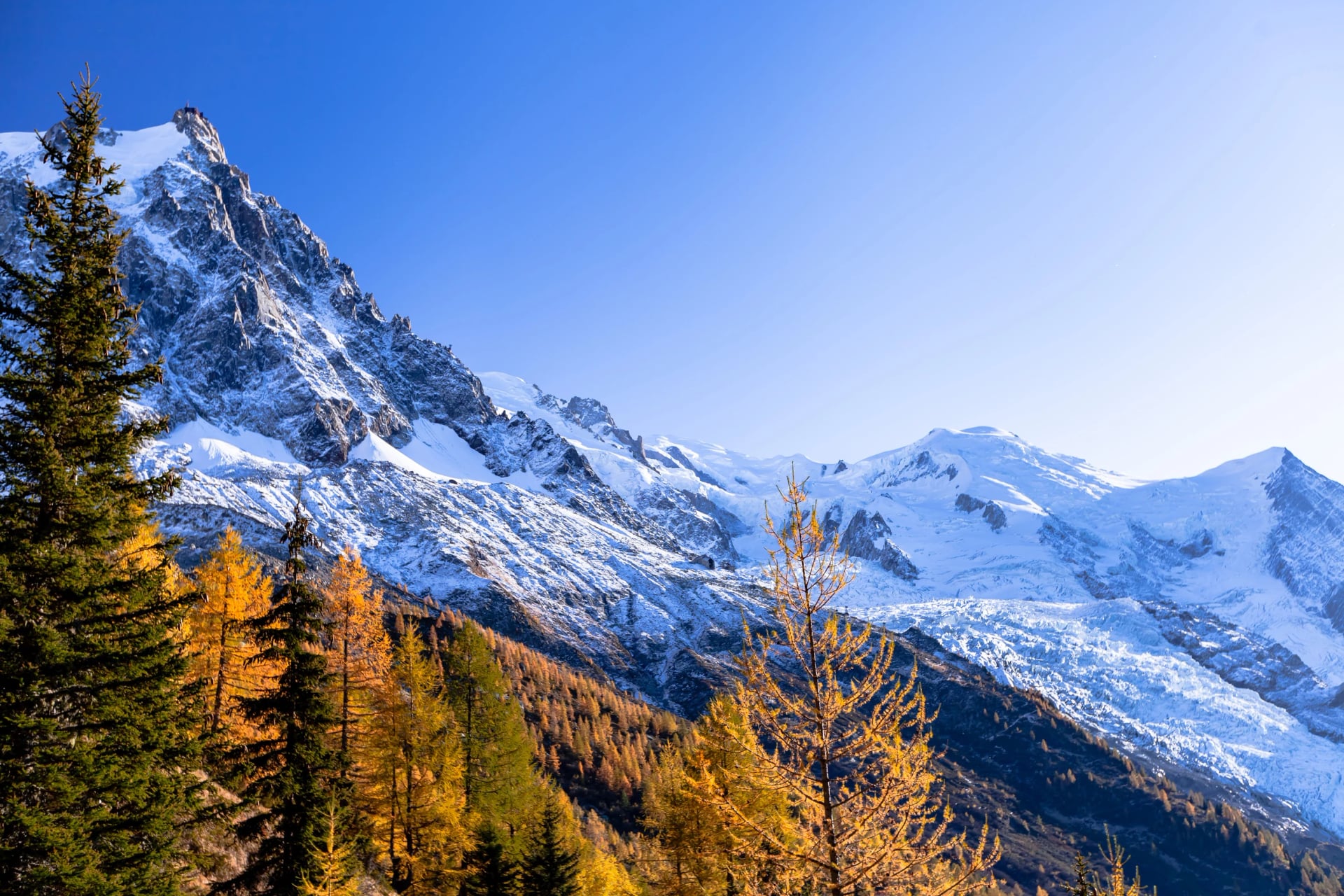
May is the month that surprises people most. The valleys are warm and green, the mountains look inviting, and it's tempting to assume the trail must be accessible. It isn't. Not as the standard hut-to-hut circuit. The high passes are still under significant snow, nearly all refuges are closed, and the trail infrastructure that makes the TMB work simply isn't in place yet. For experienced alpine hikers with crampons, an ice axe, and winter mountain skills, parts of the lower route are walkable. For everyone else, May is best experienced through valley day hikes and lower-altitude trails, with the high terrain left for the season proper.
May has its own rewards: marmots emerging from hibernation, early wildflowers below the snowline, empty valleys, and a quality of light the summer months can't replicate. But it requires honest self-assessment about your skill level and equipment.
For the full picture on hiking the TMB in May, read our in-depth guide to the Tour du Mont Blanc in May.
Off-season: November to April
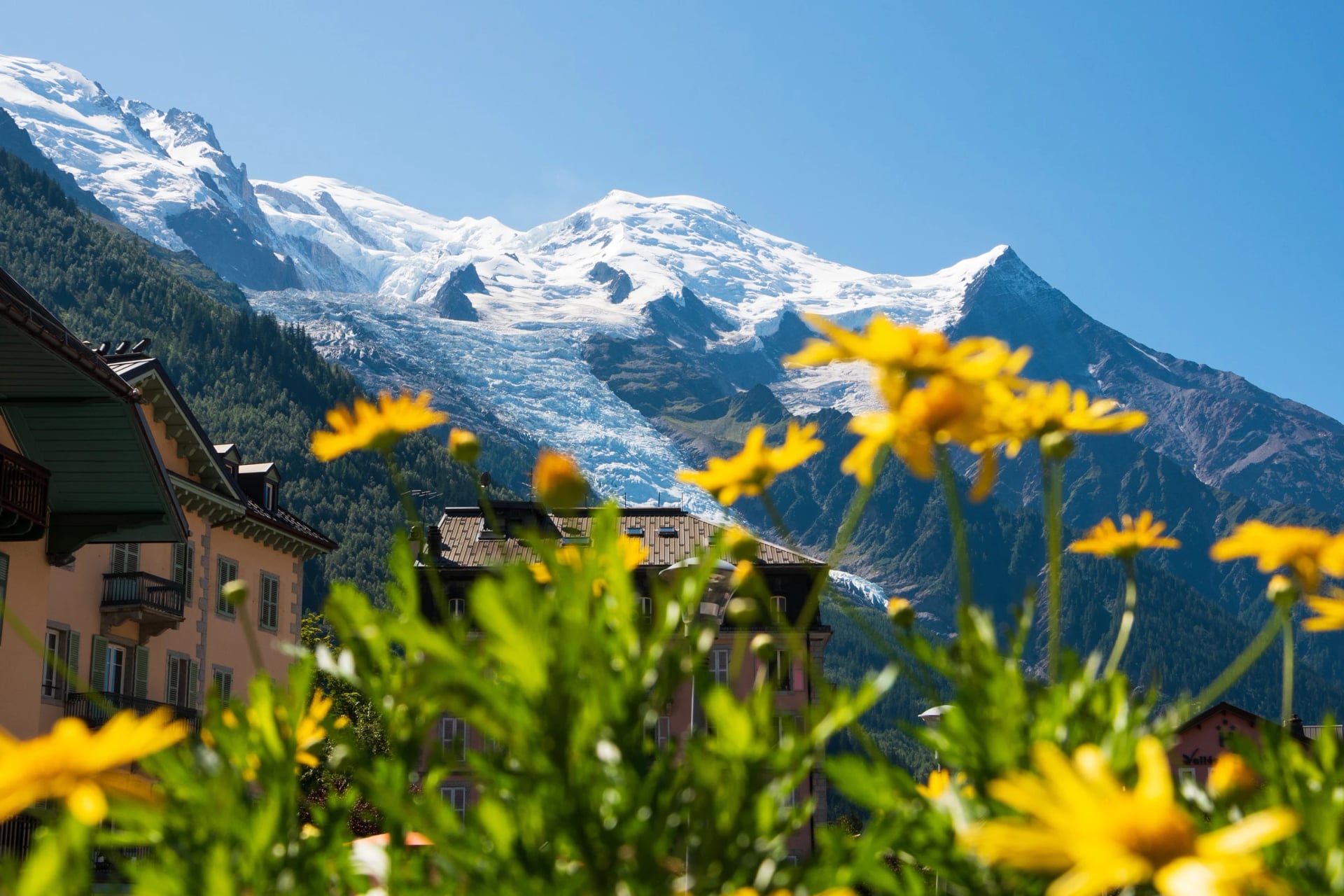
From November through April, the Tour du Mont Blanc as a hiking route does not exist. The high passes are buried under metres of snow, all refuges are closed, and the infrastructure that makes the circuit work is entirely absent. Avalanche risk is elevated throughout the winter months, and the high terrain requires expedition-level preparation and experience to access safely.
That doesn't mean the region is off-limits. Chamonix and Courmayeur are world-class winter destinations, and ski touring or snowshoeing with a certified guide offers access to spectacular high terrain in a way that's appropriate for the conditions. These are also the months to plan and book the following summer's TMB. The best refuges open for reservations in October and fill fast.
Here's the quick picture for each month:
November: First proper winter month. Snow settles at valley level, temperatures drop significantly, and the region transitions into ski season. No TMB hiking.
December – February: Deep winter. The snowpack is at its maximum, avalanche risk is high, and the massif operates as a ski destination. Chamonix and Courmayeur are spectacular, but for skiing and guided winter routes, not the TMB circuit.
March: Spring skiing at its best. Days are getting longer but conditions above 2,000m remain firmly alpine. Avalanche risk increases as the snowpack begins to destabilise with fluctuating temperatures. Still not a hiking month.
April: Winter loosens its grip in the valleys, temperatures reach 3–15°C and the lower slopes begin to green. Above 2,000m, full winter conditions remain. The lower valley walks around Chamonix and Courmayeur are pleasant for day hiking, but the TMB circuit is off the table.
Planning Your TMB: The Most Important Thing to Know
Whichever month you choose, one thing applies across all of them: book early.
Refuges for the peak season open for reservations in October of the previous year and fill within days. July and August beds are among the most sought-after accommodation in the Alps. Even September, which feels like a quieter month, sees its best refuges booked out months in advance.
When you book a TMB tour with us, we handle refuge reservations on your behalf, securing your beds as soon as the booking window opens. Browse our TMB tours to see available dates, or get in touch if you'd like to talk through the right month for your trip.


Hassle-Free
We handle itineraries, accommodations, and anything else you prefer not to deal with, so you can enjoy a carefree hike.

Book with confidence
We are a financially protected company, fully bonded and insured, keeping your money safe and allowing you to travel with confidence.

Tried & Tested Adventures
Only the best adventures on the TMB, cherry-picked by our local team with an in-depth knowledge of the region.

Unbeatable support
Our 24/7 customer support is where we show our passion, bringing you a better experience by making your well-being our number one priority.