Tour du Mont Blanc Training Plan: How to Prepare
Start early, train smart, build your fitness around consecutive days and downhill work. Here's how to arrive on the TMB ready to enjoy it, not just survive it.

Jon
Published May 11, 2026
Edited May 20, 2026
8 min read

Quick links
The most common regret on the Tour du Mont Blanc isn't a wrong turn or a bad weather day. It's arriving underprepared.
The TMB asks a lot of your body. Consecutive days of serious climbing and descending, often in unpredictable mountain weather, and the hikers who struggle most are almost always the ones who left their training too late.
The good news is that with the right plan and enough lead time, most motivated hikers are more than capable of completing it comfortably. This is that plan.
Note: This is general guidance only. Individual fitness varies, and we recommend consulting a doctor before starting any new training program.
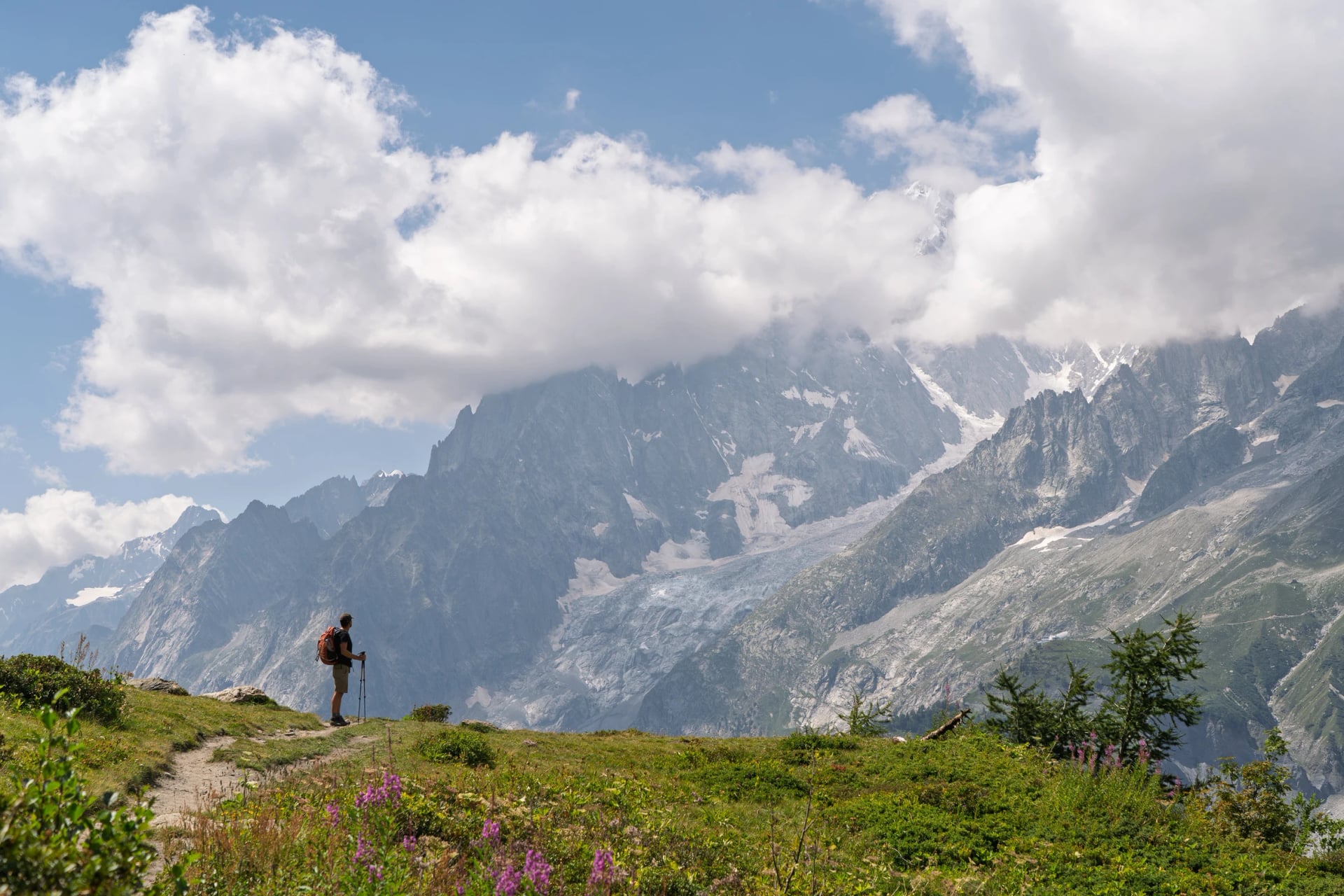
How Much Training Do You Actually Need for the TMB?
The honest answer: more than most people expect, and earlier than most people start.
The good news is that you don't need to be an athlete. With a structured training plan and enough lead time, the TMB is achievable for most motivated hikers. What you do need is consistency, a willingness to put in the work, and, crucially, enough time before your trip to actually build fitness.
Start at least 3 months before your departure. 6 months is much better.
Your TMB Training Plan: Month by Month

6 months out: Build your base
This is not the time for big efforts. It's the time to establish a consistent routine and build the aerobic base you'll need for everything that comes later.
Walk, hike, cycle, or swim 3–4 times per week
Keep sessions low intensity, you should be able to hold a conversation
Introduce one longer session per week (1.5–2 hours)
Start adding hills wherever you can. Even small ones count at this stage
If you're buying new boots, buy them now and start wearing them
Goal by end of month: Walking 3–4 times a week feels comfortable and habitual.
4–5 months out: Introduce hills and strength
Now the work starts. This is where you begin shaping your body for what the TMB actually demands.
Cardio: 3–4 sessions per week, now with deliberate elevation gain. Prioritise hills or trails over flat routes.
Strength training: Add 2 sessions per week focused on legs and core (squats, lunges, step-ups, deadlifts, and planks). Strong legs absorb the impact of alpine descents; a strong core keeps you stable on uneven terrain and reduces fatigue with a pack on your back.
Long hike: Once a week, build to a 3–4 hour hike with real elevation. This is your most important session of the week.
First back-to-back weekend: Plan at least one weekend of two consecutive hiking days this month.
Goal by end of month: Comfortable completing a 3–4 hour hike with 500–600 m of elevation gain, and still functional the next day.
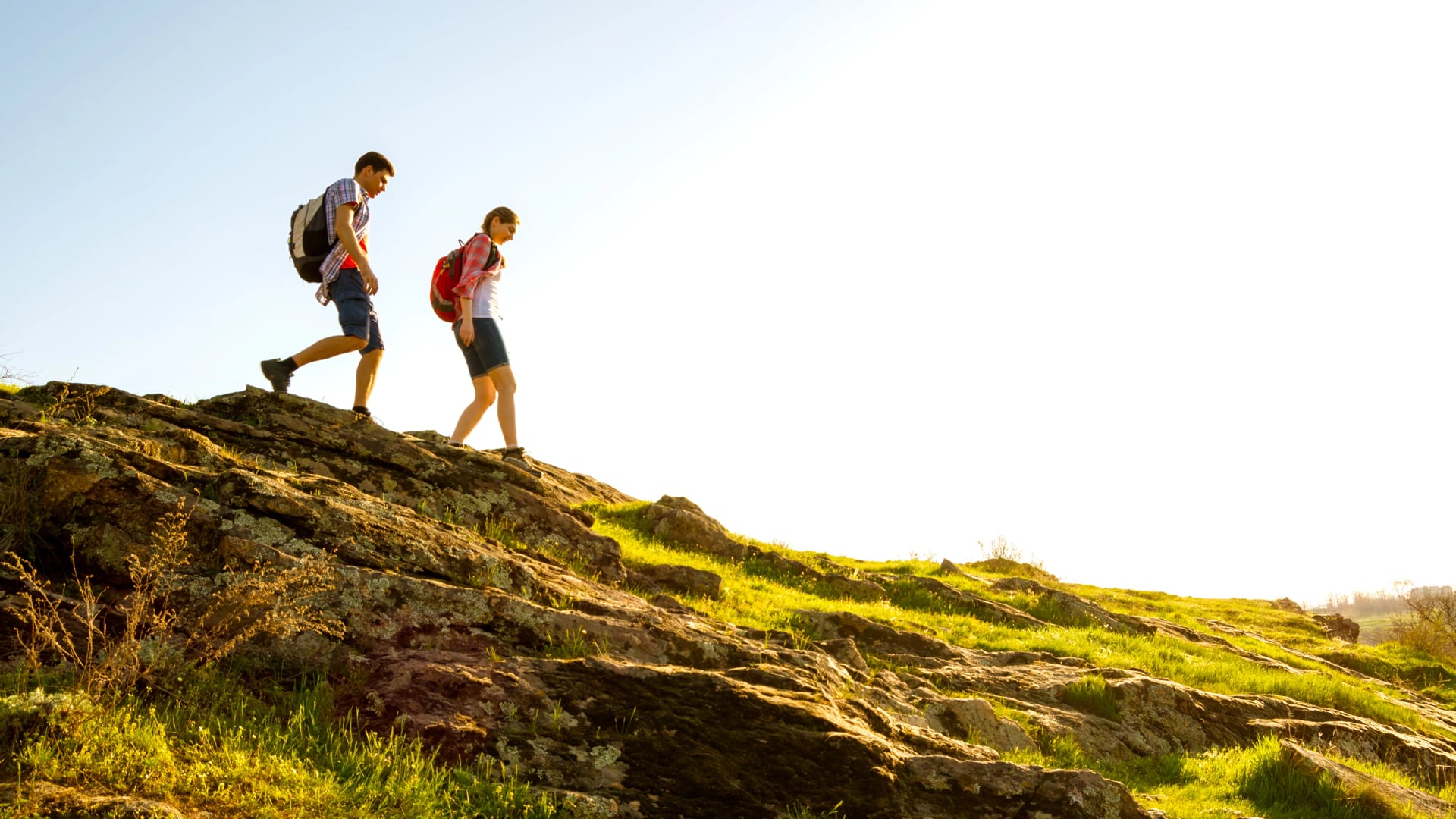
2–3 months out: Build volume and simulate the TMB
This is your most important training block. The sessions get longer, the elevation gets bigger, and the back-to-back days become a regular fixture.
Long hike: Build to 5–6 hours with 800–1,000 m of elevation gain. In your final month, aim to do this at least twice.
Back-to-back days: At least twice this block, hike on two or three consecutive days. The second and third days are the ones that matter, that's when you're training on tired legs, which is exactly what the TMB demands.
Strength training: Maintain 1–2 sessions per week. Add step-downs and single-leg exercises to specifically strengthen the muscles used in descending.
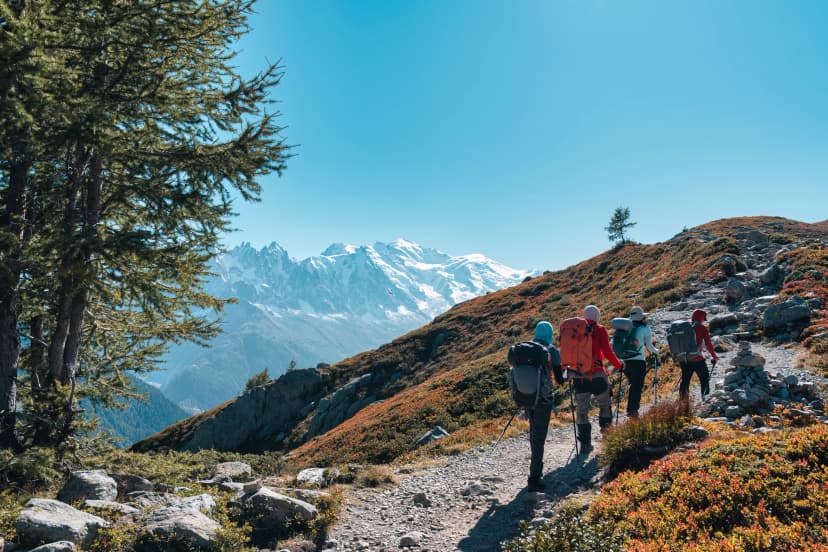
Start wearing your full pack. If you're using luggage transfer, train with a 5–7 kg daypack. If carrying everything yourself, work up to 10–12 kg. Your back and hips need time to adapt.
Descents: Deliberately seek out long, steep downhill sections in your hikes. This is what most people skip in training and most regret on the trail.
Goal by end of month: Completing a 6-hour hike with 1,000 m of elevation and feeling strong enough to do it again the next day.
4–6 weeks out: Sharpen and consolidate
You're not building new fitness at this point. You're consolidating what you've built and making sure your body is robust and ready.
One final big weekend: A multi-day hiking trip, ideally in the mountains, is worth more than any single training session at this stage. Even two days in hilly terrain with your full pack and your actual boots is excellent preparation.
Maintain your weekly long hike but don't dramatically increase volume. The risk of injury outweighs the gains.
Test everything: This is your last chance to identify problems with boots, socks, pack fit, and poles before you're in the Alps.
Reduce strength training to once a week to allow your muscles to stay fresh.
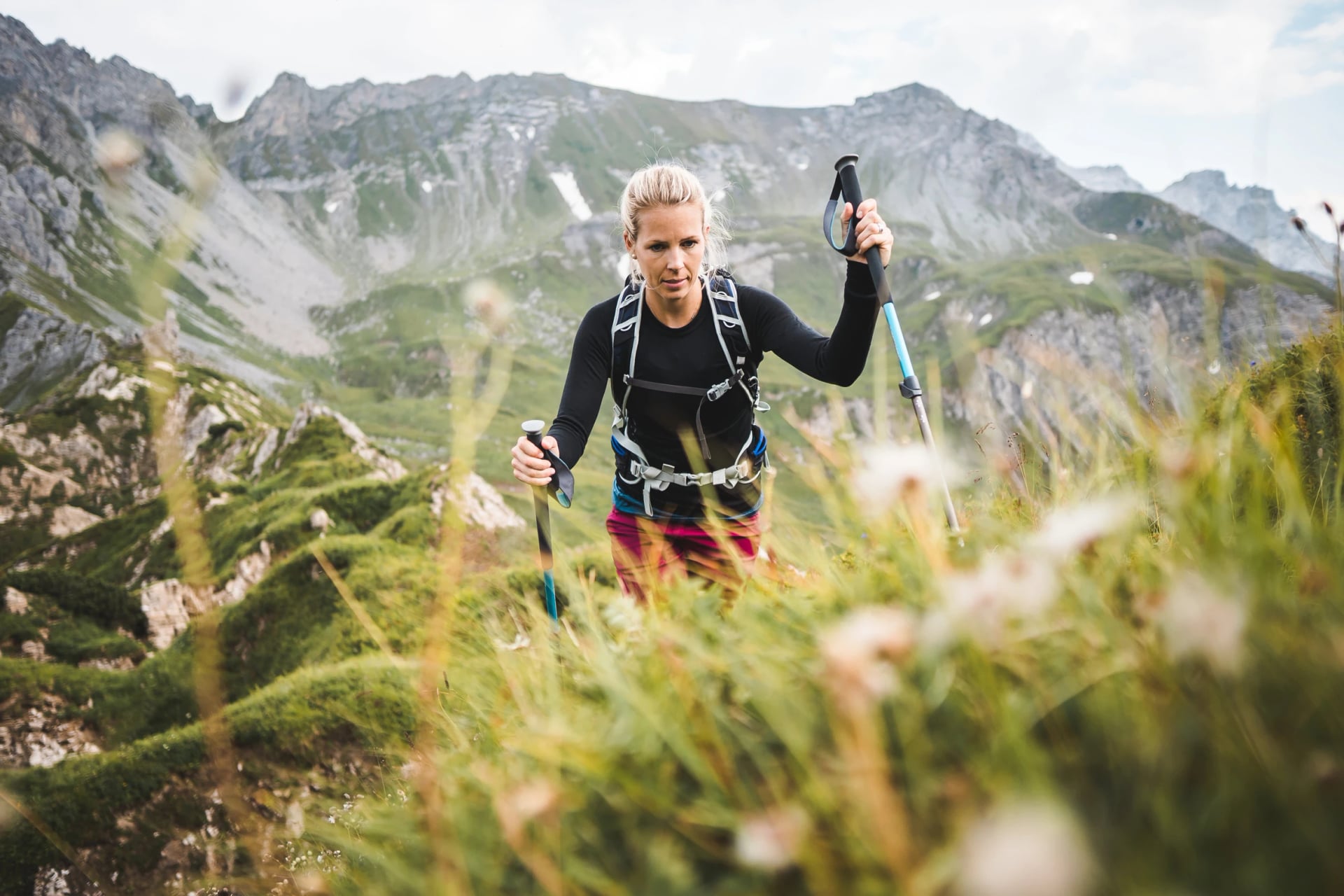
Final 2 weeks: Taper
Stop trying to get fitter. The fitness is already there. What your body needs now is rest, so it arrives at the start line fresh rather than worn down.
Cut your training volume by at least 50%
Keep 2–3 short, easy sessions to stay loose. A 1-hour walk, a light cycle
No new long hikes, no new gear, no sudden changes to routine
Sleep well, eat well, and trust the work you've put in
A well-rested body will outperform an overtrained one every time.
The Golden Rules of TMB Training
Before getting into the plan, three principles that apply regardless of your starting fitness level:
The 4 Pillars of TMB Training
Cardiovascular endurance
The foundation of everything. You need to be able to sustain effort for 5–8 hours a day, for 9 to 11 days. Hiking, running, cycling, and swimming all build this, but hiking with elevation is the most specific and effective preparation.
Leg and core strength
Strong quads, hamstrings, glutes, and calves absorb the impact of descents and power you up climbs. A strong core stabilises your body under a loaded pack and reduces fatigue across the whole body. Squats, lunges, deadlifts, step-ups, and planks are the key exercises. Aim for 2 strength sessions per week in your peak training block.
Downhill resilience
Often the most neglected aspect of TMB training. The descents on the TMB are long, steep, and relentless, and they are what causes the quad burn and knee fatigue that slows many hikers down in the second half of the trek. Train the downhills as hard as you train the uphills. Eccentric exercises like slow step-downs are particularly effective for building the specific strength needed.
Mental endurance
The TMB will have its challenging moments. A long afternoon climb, a pass that seems to keep getting further away, tired legs on day 8. The hikers who finish are those who keep moving. You can build mental resilience in training by pushing through sessions when you're tired, completing your planned distance even when you feel like stopping.
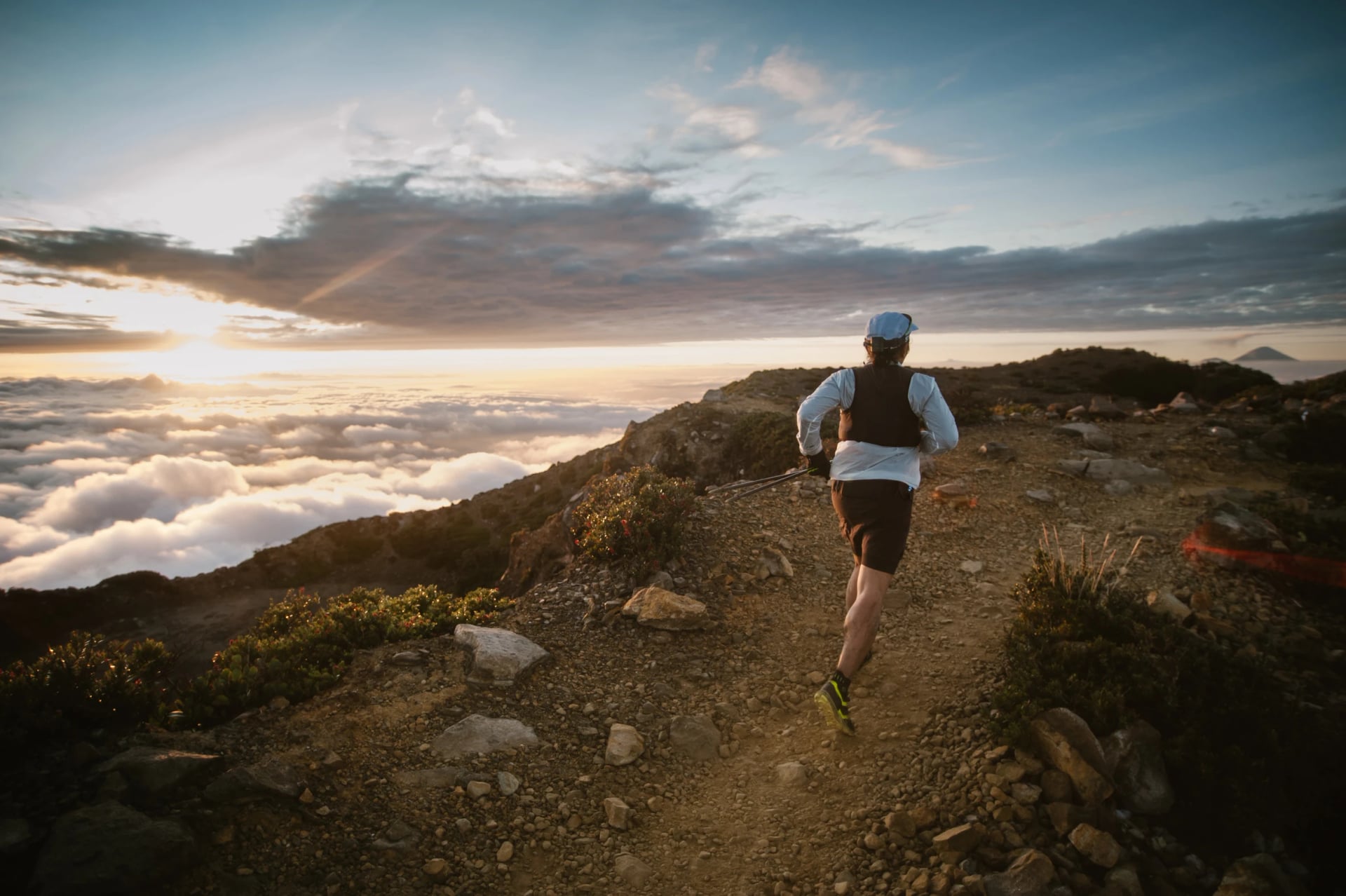
Gear to Train In
Training is not just about fitness, it's about arriving on the TMB with zero gear surprises.
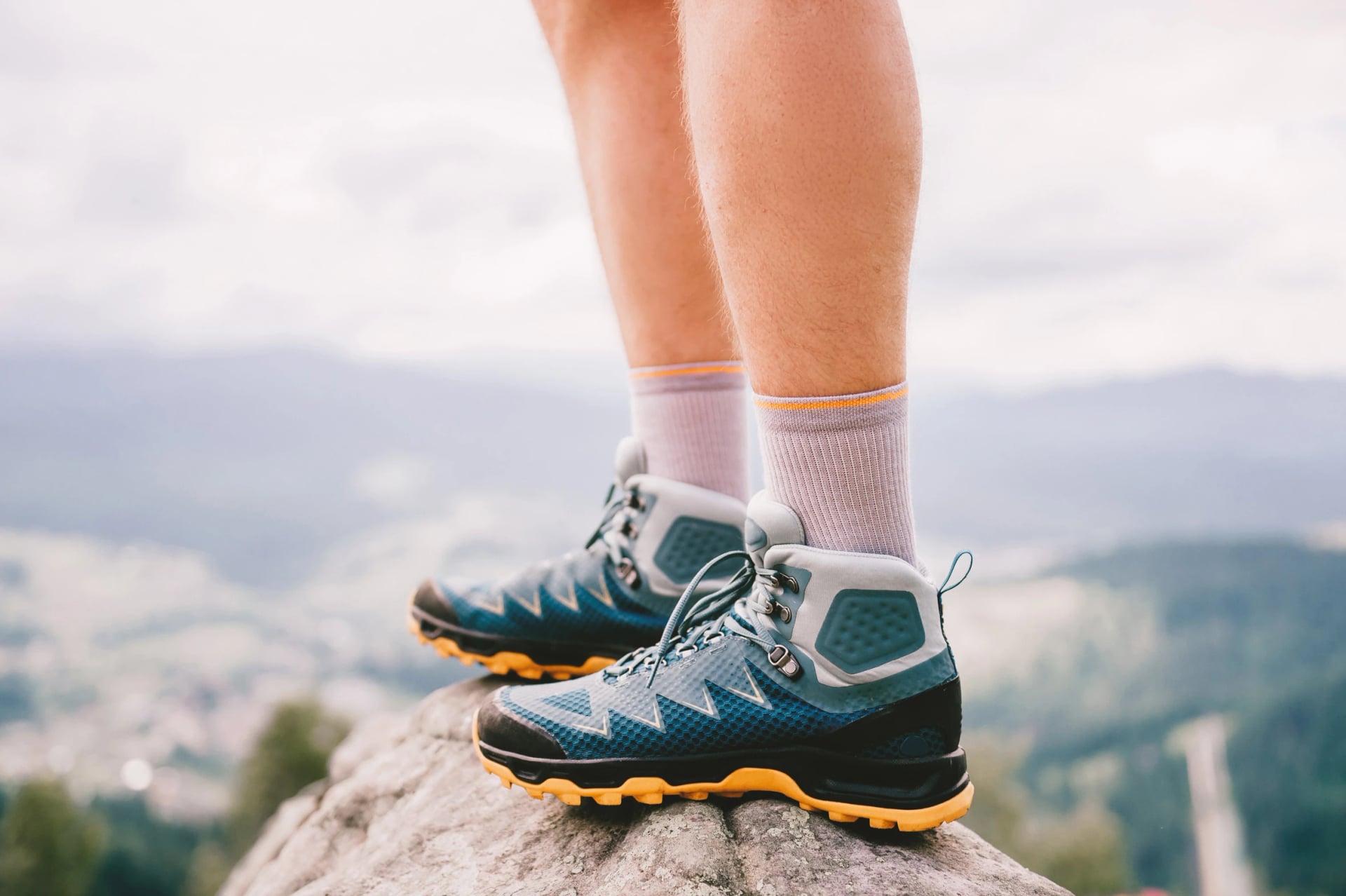
Footwear: This is the most important rule in this entire post. Train in the exact hiking shoes or boots you'll wear on the TMB, from day one. New boots on a long-distance alpine trek are a common cause of blisters and discomfort. Wear them on every training hike, in all weather, until they feel like a second skin.

Pack: Train with the pack you'll actually carry, loaded to roughly the weight you expect on the trail. Your back, hips, and shoulders need time to adapt to the contact points and the load distribution.

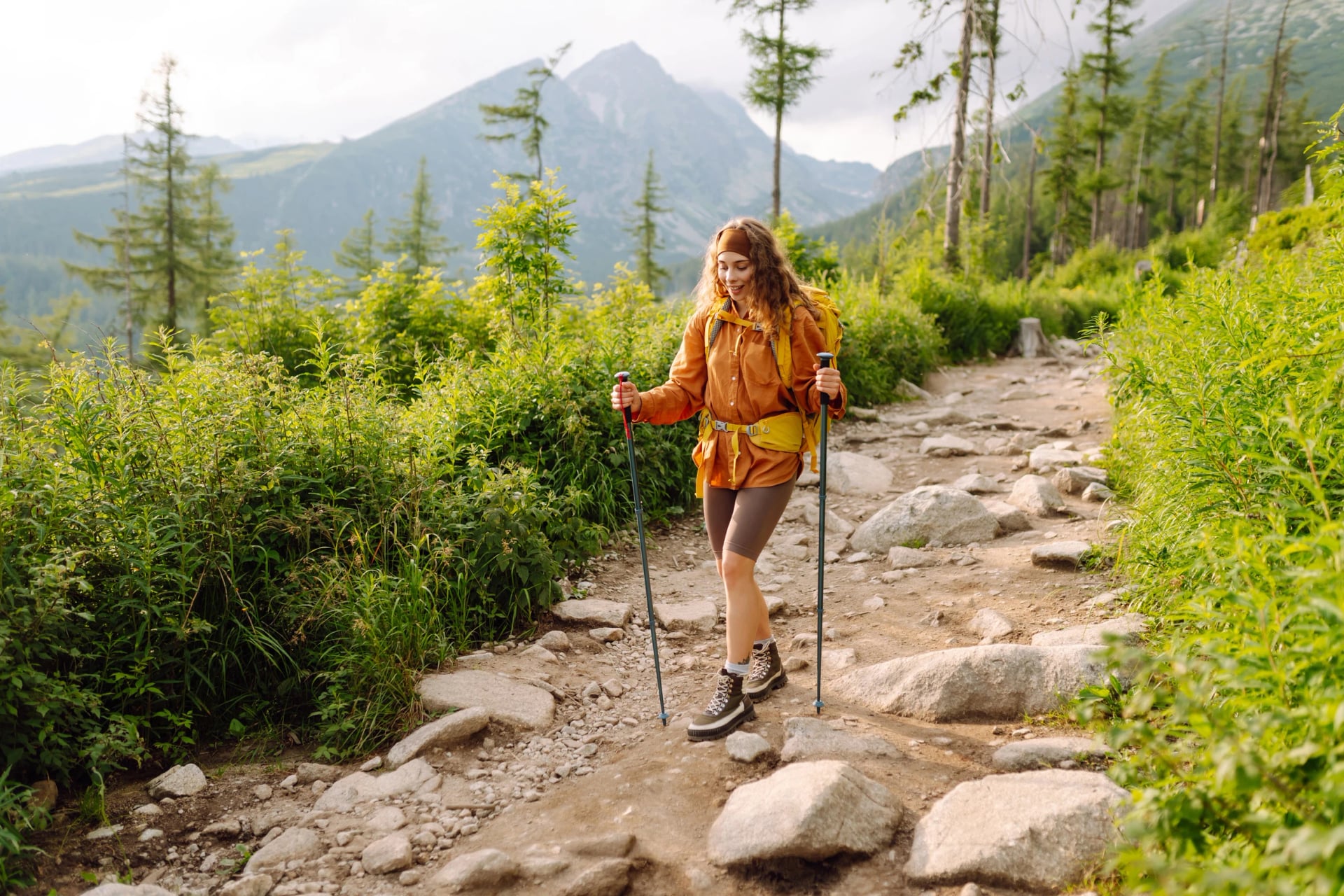
Poles: If you plan to use trekking poles on the TMB (which is strongly advised), train with them. Using poles correctly is a skill, and an awkward relationship with your poles on day 1 in the Alps is not ideal.
Socks: Experiment with sock combinations during training to find what works for your feet. Many blisters on the TMB are caused not by boots but by the wrong socks.
Training If You Live in a Flat Area
Living somewhere flat is not a dealbreaker, but it does require a bit more creativity.
Use stairs. Stair climbing in a tall building or on stadium steps is a surprisingly effective substitute for hill training. Load your pack and go up and down.
Treadmill incline. Set the incline to maximum (typically 12–15%) and walk at a steady pace. Not as good as real hills, but significantly better than flat walking.
Seek out weekend hills. Even if you can't hike in the mountains during the week, a monthly trip to hillier terrain for a full day's walking makes a big difference.
Prioritise strength training. When you can't train the specific movement pattern (uphill/downhill hiking), building the underlying muscle strength is the next best thing. Focus on squats, lunges, and step-downs.
Use elevation on a bike. If you cycle, hills and resistance build the same aerobic and muscular base as hiking. A long hilly ride is excellent TMB preparation.
From Training to Trail
Planning your TMB? Not sure if the TMB is right for your fitness level? Our guide to TMB difficulty breaks down exactly what to expect. And when you're ready to book, browse our guided and self-guided TMB tours to find the right fit for your pace and style.

About this author
Jon is our travel advisor and an outdoor adventurer who is happiest on the move. While mountain biking is his personal passion, he thrives on crafting hiking adventures for others — planning routes and adding the little touches that turn a trip into a core memory.